
Last updated: March 2026 · For adults 19+ in Canada · Informational only
Canadian Classics Original is one of Canada’s most talked-about cigarette SKUs—partly because it sits in that familiar lane of “baseline full-flavour” smokes, and partly because smokers love debating whether anything is still the same after years of packaging laws, flavour-policy shifts, and changing retail habits. If you are trying to choose between Original and Silver, understand what “Original” is supposed to mean in the lineup, or answer the emotional question—is this what I used to buy at gas stations ten-ish years ago?—this guide is built for you.
We will go deep in a buyer-realistic way: how people describe the profile, what typically differentiates Original from Silver, what can change over time even when a trademark stays, how storage and freshness skew perception, and how to run a fair comparison instead of relying on memory alone. For manufacturing context, also read how native cigarettes are made: what buyers should understand (swap the URL if your slug differs).
On Native Smokes Canada, pair this with full flavour vs light vs ultra light, why some cigarettes burn faster than others, why cigarettes taste different around the world, 2026 Canadian cigarette prices, and carton pack counts.
What you will learn
- Where Canadian Classics Original sits in the “Canadian smoker” mental map
- Original vs Silver: the practical differences shoppers confuse most
- King-size basics, draw, burn, and what changes sensory perception
- Reading the pack in the plain-packaging era (what still matters)
- The decade question: same brand vs identical smoke chemistry
- Regulatory and retail context (high level, Canada)
- Freshness, storage, and why two packs feel different
- Gas stations vs online: what changes besides the building
- How Original compares in conversation to other Canadian-native brands
- Myths, a comparison table, and a large FAQ
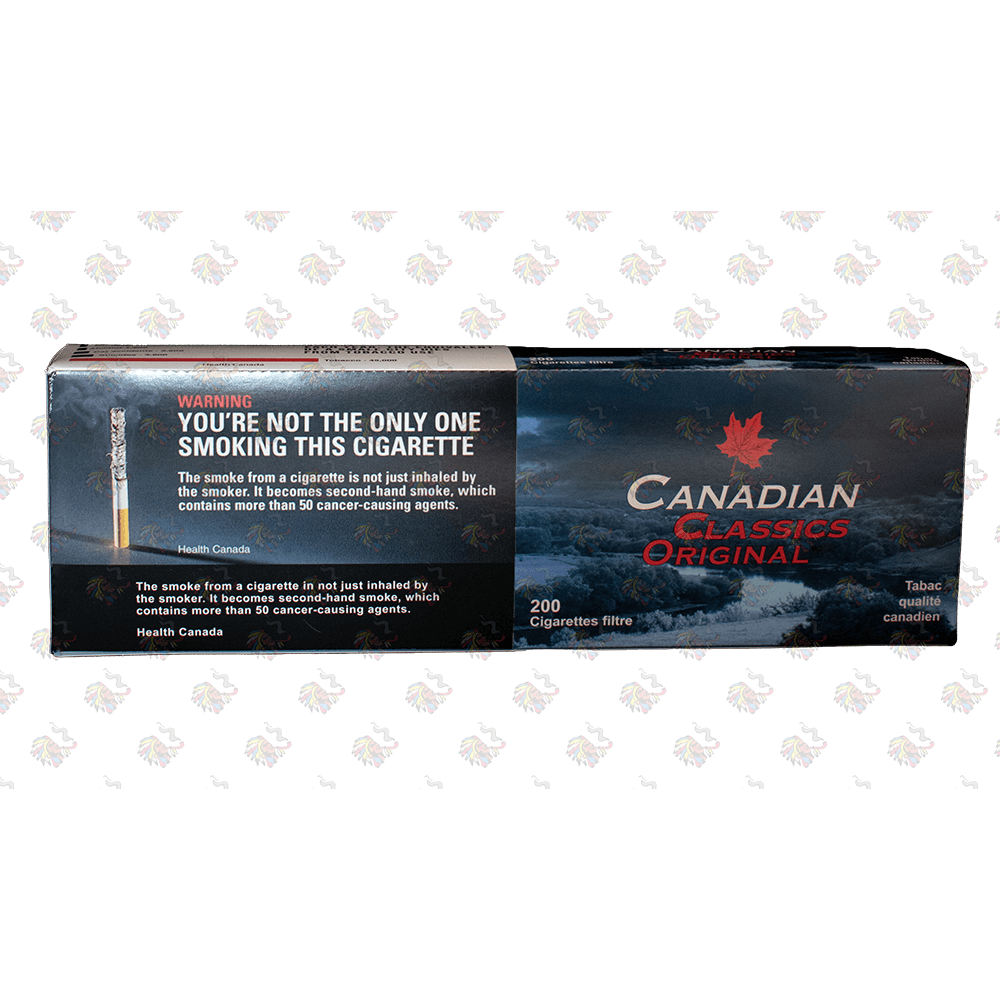
Canadian Classics Original in the Canadian cigarette landscape
Canada’s cigarette conversation is dominated by a few recurring themes: extremely high retail prices in many provinces, strict packaging and promotion rules, and a long-running shift in what can be sold in flavoured categories—especially menthol-style products, depending on timeframe and product class. Within that environment, shoppers still navigate by brand families and strength tiers because those are the fastest mental shortcuts at the counter.
Canadian Classics is widely treated as a “Canadian-native brand lane” in public discussion—distinct from the multinational flagship lines you see in global advertising history, and often discussed alongside other Indigenous-manufactured or Canadian-market brands that adult smokers buy through different retail paths. Original is typically the name buyers use for the baseline profile in that family: the SKU people mean when they say “regular Canadian Classics” without specifying Silver.
That matters for SEO and for sanity: many “they changed it” stories are actually SKU mistakes (Original vs Silver), freshness differences, or memory drift—not a secret factory conspiracy.
Canadian Classics Original vs Silver: what the names usually imply
If you only read one section, read this. Original vs Silver is the single biggest source of “it doesn’t taste like it used to” confusion—because the two are related in name but not interchangeable in experience.
In common Canadian smoker language (not a manufacturer spec sheet on this page):
- Original is typically discussed as the full-flavour anchor—more body, more direct smoke character, and the profile people reference when they want the “classic” Canadian Classics experience.
- Silver is typically discussed as a milder / lighter-positioned line within the same brand family—often associated with reduced harshness cues for smokers who want a softer draw or a different strength tier.
Mechanically, “light” cigarettes often involve differences in blend targets and filter ventilation strategies. Ventilation changes how air mixes with smoke and can change throat hit and perceived strength—even when someone thinks they are smoking “the same brand.” For a structured explainer, use full flavour vs light vs ultra light.
Format: king size, draw, burn, and the “feel” of a Canadian smoke
Most discussion of Canadian Classics Original assumes the familiar king-size cigarette format common across Canadian convenience retail: a standard consumer length and circumference that smokers learn as “normal.” Format interacts with burn and heat because it influences how the tobacco column packs, how the filter feels in the mouth, and how fast the ember travels—especially when moisture changes.
If your complaint is “it burns faster now,” start with burn rate factors—paper, moisture, puffing, wind—before you conclude the brand is unrecognizable. Burn speed changes can make a cigarette feel like a different product even when the broad blend family is similar.
How to read the pack (especially when plain packaging reduces branding cues)
Canada’s tobacco packaging environment has pushed products toward standardised, low-glitz presentation with strong health-warning requirements. Even when adults dislike the aesthetics, the practical consequence is simple: you must read text cues carefully to ensure you bought Original and not Silver, and to ensure you are not accidentally grabbing a different line extension in a rushed purchase.
Buyer checklist at the shelf (or when unboxing a delivery):
- Variant name: confirm “Original” vs “Silver” (or other) explicitly.
- Quantity: carton vs pack—buying volume changes how long product sits before use.
- Seal integrity: damaged wraps can accelerate moisture loss.
- Crush damage: broken filters and bent rods change draw and perceived harshness.
Are Canadian Classics Original the same cigarettes you could buy at gas stations a decade ago?
This is the emotional core of the article, so we will separate three different questions people smuggle into one sentence:
- Is it still Canadian Classics Original as a product line? (brand continuity)
- Is it chemically identical puff-for-puff to ~2014–2016? (recipe drift—usually unverifiable publicly)
- Why does it feel different to me today? (memory, freshness, tier mistakes, regulation, and personal tolerance)
1) Brand continuity: the name stayed, the shelf did not
In ordinary commerce, Canadian Classics remains a recognizable Canadian-market brand family, and Original remains the shorthand many adults use for the baseline SKU. That is real continuity: people still ask for it by name, still compare it to other Canadian-native brands, still argue about Silver vs Original online.
But continuity of trademark is not the same as a guarantee of unchanged smoke chemistry forever. Tobacco products are industrial recipes built from agricultural inputs. Leaf crops vary year to year. Manufacturing lines get tuned. Regulatory constraints evolve. Those forces can nudge taste and burn slightly even when marketing positioning stays “full flavour.”
2) What might have changed in the blend—even if quietly
Without access to proprietary formulation documents, no retailer article can honestly publish “exact ingredient delta since 2015.” What we can say factually is industry-normal: cigarette blends are maintained to hit sensory targets under real-world constraints, and those constraints move over time—especially in Canada.
- Flavour and additive rules can change what tools manufacturers use to smooth harshness or achieve certain notes.
- Supply availability for specific leaf grades can shift blend composition while trying to preserve a similar profile.
- Process control can change micro-details smokers perceive as “harsher” or “smoother.”
So the precise, scientific answer is: maybe—not publicly provable here—and not required to explain most “it feels different” reports.
3) What definitely changed: Canada’s tobacco control environment
Even if a recipe held perfectly steady, your experience might not—because the product is not consumed in a vacuum. Canada continues to implement tobacco control measures affecting packaging, product formats, and flavour categories in ways that reshape the market adults navigate. For official background (not brand-specific claims), see Health Canada’s tobacco control hub.
Common adult-smoker observations tied to the last decade include:
- Plain / standardized packaging changed the emotional “first impression” before lighting.
- Flavour bans and category restrictions pushed many smokers to switch SKUs—sometimes permanently—creating a survivorship bias in what people remember as “normal.”
- Retail channel shifts mean freshness, rotation, and handling differ by location.
4) Memory is the secret ingredient nobody prices into the argument
Human taste memory is unstable. Nicotine context changes. Mood changes. What you ate, drank, and slept changes. Comparing “2014 me” to “2026 me” is not a controlled test—so the fair question is narrower: does a fresh Original pack today resemble a fresh Original pack today, and do you like it?
If you want a neutral reference on cigarettes as a global product category (not a Canadian Classics spec), the Wikipedia article on cigarettes can help readers separate manufacturing basics from brand nostalgia.
Freshness and storage: the fastest way to make Original feel “wrong”
Two packs with the same name can diverge sharply if one was stored poorly. Tobacco that dries out can taste harsher and burn hotter. Packaging that failed can accelerate moisture loss. A carton opened too early for your consumption pace can leave the last packs tasting worse than the first—people blame the brand; the real culprit is often time × environment.
Practical storage guidance (common sense, not a guarantee):
- Avoid leaving packs in hot vehicles for long stretches.
- In dry winter air, indoor heating can desiccate tobacco faster than you expect.
- If you buy cartons, pace opening packs so you are not exposing cigarettes to air unnecessarily—see carton breakdown.
Gas stations vs reserves vs online: what changes (and what does not)
Adults buy tobacco through multiple legitimate channel types in Canada. The cigarette may carry the same brand name, but price economics, shipping time, handling, and batch freshness can differ. Online buying adds courier time and packaging stress tests; convenience stores add counter-speed mistakes (wrong tier grabbed). Neither channel magically creates a different SKU by itself—but both can change your subjective experience.
For pricing context across Canada, use 2026 price guide—retail shelf shock is often tax-driven, not tobacco-driven.
How smokers compare Canadian Classics Original to other Canadian-native names
In forums and shop conversations, Canadian Classics Original is frequently compared to other Indigenous-manufactured or Canadian-market lines—brands shoppers see alongside each other in native cigarette discussions. Comparisons are subjective, but they are useful for buyers trying to orient themselves: some adults want a softer draw, some want a heavier note, some prioritize consistency carton to carton.
If you are exploring alternatives within the same shopping session, browse cigarettes and read brand-level guidance like PlayFare’s, Nexus, DK’s and more—comparison shopping is less about “which is objectively best” and more about which matches your strength preference and consistency expectations.
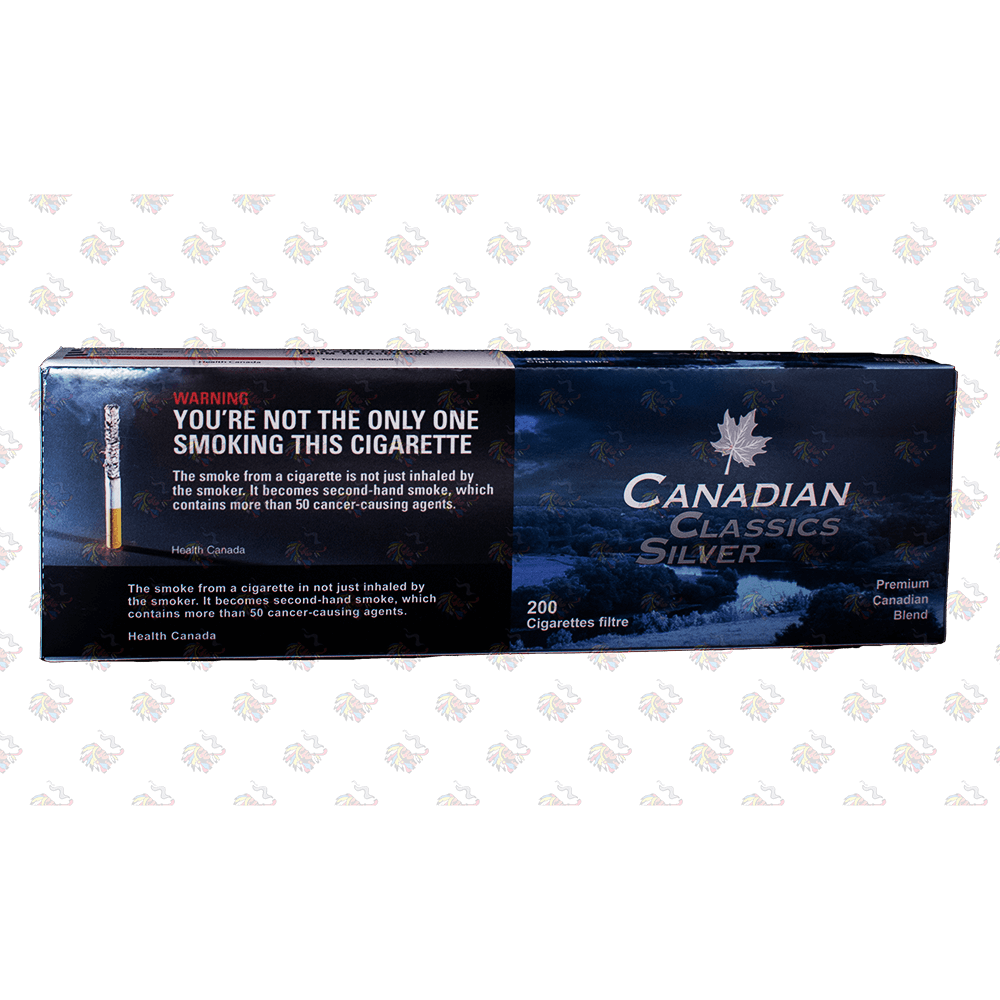
Table: Original vs Silver (shopper-level)
| Topic | Canadian Classics Original (typical discussion) | Canadian Classics Silver (typical discussion) |
|---|---|---|
| Strength positioning | Often called full-flavour / baseline | Often called milder / lighter-positioned |
| Common confusion | Bought Silver but remembered Original | Bought Original expecting Silver softness |
| What to verify | Pack text: Original | Pack text: Silver |
| Best paired guide | Full flavour vs light vs ultra light | |
Table: “Same as 10 years ago?”—what stable vs what drifts
| Dimension | Often stable | Often drifts (or feels different) |
|---|---|---|
| Brand family name | Canadian Classics as a recognizable line | Pack graphics/warnings regime |
| Shopper intent | “Original = baseline” mental model | SKU confusion at speed-buy moments |
| Physical product | King-size familiarity | Moisture, handling, batch variation |
| Regulation | — | Flavour/additive policy environment (Canada) |
| Your perception | You can still prefer a tier | Memory, tolerance, context effects |
Myths vs reality (expanded)
- Myth: “If it tastes different, it must be fake.” Reality: Tier mistakes, dryness, and batch variation are far more common first explanations—though counterfeits exist globally, so source matters.
- Myth: “Silver is just Original with a different box.” Reality: Strength tiers can differ in engineering—not only ink.
- Myth: “Online always means older stock.” Reality: Depends on seller rotation; reputable retailers compete on repeat customers.
- Myth: “Full flavour means safer.” Reality: No—smoking is harmful; see the WHO tobacco fact sheet.
FAQ (expanded)
What does “Original” mean on Canadian Classics?
In common speech, it is the baseline Canadian Classics profile—most often discussed as the fuller “regular” line compared to Silver.
Is Canadian Classics Original stronger than Silver?
Typically discussed that way in tier language, yes—adult perception still varies. Use strength tiers guide for framing.
Why do people say gas-station packs tasted different “back then”?
Packaging cues changed, prices rose, flavour rules tightened, and personal memory romanticizes older routines. Also: you may be remembering a different tier or fresher packs.
Can two Original packs taste different?
Yes—freshness, handling, and batch variation can do that without any conspiracy.
Does Canadian Classics Original burn faster than other king-size brands?
Burn depends on moisture, paper behaviour, puffing, and more—compare using burn rate guide.
Is this article claiming the recipe is identical year to year?
No. It claims brand continuity is plausible while recipe drift is industry-normal and usually not publicly detailed.
Where can I buy Canadian Classics lines online in Canada?
Browse cigarettes at Native Smokes Canada—adults 19+, subject to stock availability.
Are Indigenous-manufactured cigarettes “fake” mainstream brands?
That is the wrong frame. Legitimate markets include Indigenous-manufactured brands sold through proper channels. Counterfeits exist as a separate risk—buy from trusted retailers.
Does switching from retail to online change the cigarette?
Not automatically—but shipping and handling can change freshness cues. Evaluate seal integrity and storage when your package arrives.
Takeaway
Canadian Classics Original is best understood as a long-running Canadian-market SKU that still functions as the “baseline” choice for many adults—while the world around it (packaging law, flavour policy, your own tolerance, and freshness reality) constantly reshapes how that SKU feels. If you want truth instead of nostalgia, compare Original to Original, verify Silver isn’t sneaking into your memory, control freshness, and use the guides linked above to interpret burn and strength like a serious buyer—not a time machine.
Continue learning with global taste differences, how cigarettes are manufactured, and Canadian pricing reality—then shop Native Smokes Canada for adults 19+.
Disclaimer: Informational only; not medical, legal, or tax advice. Smoking causes serious harm; quitting is the best health choice. “Canadian Classics” and related marks are trademarks of their respective owners; used here for identification. Intended for adults 19+ where lawful.